Why Black Women Are Misdiagnosed with ADHD (And What to Do About It)
Black women are misdiagnosed with ADHD because the diagnostic criteria were built on research that excluded them, and the healthcare system routinely interprets their symptoms through a lens of bias rather than neuroscience. The result is decades of incorrect or delayed diagnoses, usually anxiety, depression, or personality disorders, while the actual root cause goes untreated.
Let Me Tell You Something Nobody Said Out Loud
I was in my forties when I finally got my own ADHD diagnosis. By then, I had a PhD, a clinical career, and a private collection of sticky notes, half-finished planners, and guilt I had been carrying since childhood. I was not undiagnosed because the signs were not there. I was undiagnosed because nobody looked for ADHD in a high-achieving Black woman who was holding it together on the outside.
If that lands for you, keep reading. This is one of the most common and least talked about injustices in women's mental health care.
How the Diagnostic Criteria Were Built (And Who They Left Out)
ADHD research for most of the 20th century was conducted almost exclusively on young white boys. The hyperactive, impulsive, can't-sit-still presentation became the defining image of ADHD. Girls were already underrepresented. Black children were already being criminalized rather than evaluated. And Black girls were essentially invisible in the data.
What that means today is that clinicians were trained to look for a version of ADHD that was never designed to capture what ADHD looks like in Black women. Our presentation is often quieter, more internalized, and buried under years of compensating. The hyperactivity looks like anxious overachievement. The impulsivity symptoms look like emotional intensity. The inattention looks like being scattered or disorganized, which too many providers chalk up to stress or character.
The Masking Problem
Masking is the act of hiding or suppressing neurodivergent traits to survive in neurotypical environments. Black women are, frankly, experts at it. We were taught early that we had to be twice as good to get half as far, and that showing any sign of struggle was not safe. So, we learned to compensate, to over-prepare, to build systems that held us together just enough that nobody could tell we were drowning internally.
Masking is exhausting. It also makes ADHD nearly invisible to the outside world and to providers who are not trained to look beneath the surface. When you finally show up in a clinical office, overwhelmed, depleted, and barely functioning, you get handed an anxiety diagnosis or a depression diagnosis, because those are the labels that fit the presentation they are trained to see.
The Misdiagnosis Pattern
Here is what the research and my clinical experience both confirm: Black women with ADHD are far more likely to receive a diagnosis of anxiety, depression, or even borderline personality disorder before anyone considers neurodivergence. There are a few reasons for this.
First, the emotional dysregulation that comes with ADHD, which is very real and very documented, is often read in Black women as being too emotional or difficult rather than as a neurobiological symptom. Second, the co-occurrence of anxiety and ADHD is high. Roughly half of adults with ADHD also have an anxiety disorder. When a provider only treats the anxiety and misses the ADHD underneath it, you get partial relief at best. Third, implicit bias is real. Studies have consistently shown that Black patients are less likely to be referred for specialty evaluation and more likely to have their concerns minimized or attributed to lifestyle factors.
The result is that Black women often spend years, sometimes decades, in treatment that is not wrong exactly, but is incomplete. They get better at managing symptoms without ever addressing the root.
What ADHD Actually Looks Like in Black Women
Forget the hyperactive little boy. Here is what I see in my practice:
•Chronic overwhelm that does not respond to traditional time management strategies
•Racing thoughts at night, difficulty shutting the brain off
•Rejection sensitivity, extreme emotional responses to perceived criticism or failure
•Starting many things, finishing few, and feeling profound shame about it
•Using high-achieving behavior as a way to mask chaos underneath
•Forgetting things that matter to you, not because you do not care but because your working memory does not hold information the way it is supposed to
•Exhaustion that sleep does not fix, because your brain is working twice as hard all day just to appear normal
Sound familiar? That is not a character flaw. That is a nervous system operating without the scaffolding it needs.
What a Real Evaluation Should Include
A proper ADHD evaluation for a Black woman should not be a 20-minute appointment where someone hands you a checklist. It should include a thorough clinical history, exploration of childhood patterns, an honest look at how you have been coping and compensating, and a provider who understands that masking can hide ADHD in plain sight.
It should also include a conversation about what co-occurring conditions might be present. Anxiety and ADHD overlap significantly. So do trauma symptoms and ADHD. Sorting out which is primary and which is secondary, or understanding how they interact, requires nuance that a brief appointment cannot provide.
An integrative approach also looks at what is happening in the body. Sleep disruption, hormonal shifts across the menstrual cycle, and chronic stress all significantly worsen ADHD symptoms. Treating ADHD without addressing those factors is like putting a bandage on a wound that needs stitches.
This Is Not About Adding Another Label
I want to be clear about something. Getting an ADHD diagnosis is not about collecting a new identity or explaining away every hard thing in your life. It is about finally having a framework that fits your actual experience, so that the support you receive can actually work.
When I understood my own ADHD, I stopped blaming myself for the ways I had been struggling. I started working with my brain instead of against it. I want that for you, too.
You Deserve an Evaluation That Sees the Whole Picture
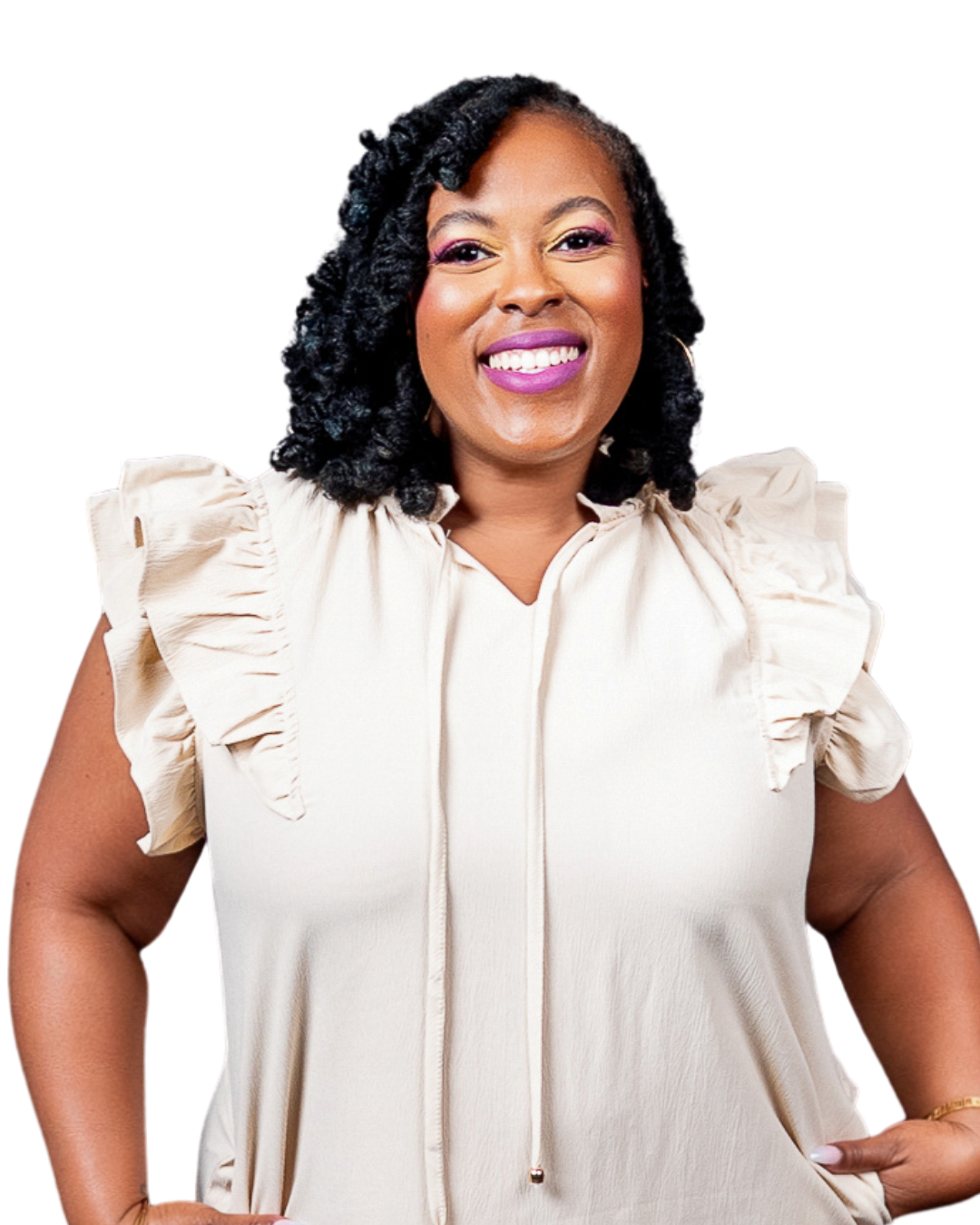
At Restored Radiance Integrative Psychiatry, Dr. Courtney Pate, PMHNP-BC, FNP-c, provides comprehensive psychiatric evaluations that are designed to see you clearly, not through the lens of bias, not through a checklist built for someone who looks nothing like you, but as the whole, complex, high-achieving, and depleted person you actually are.
If you have been told your labs are normal, your anxiety is managed, and you should just try harder, but something still feels off, this is your invitation to explore whether ADHD has been hiding in plain sight.
Book your appointment today at Restored Radiance Integrative Psychiatry. You deserve care that starts at the root.